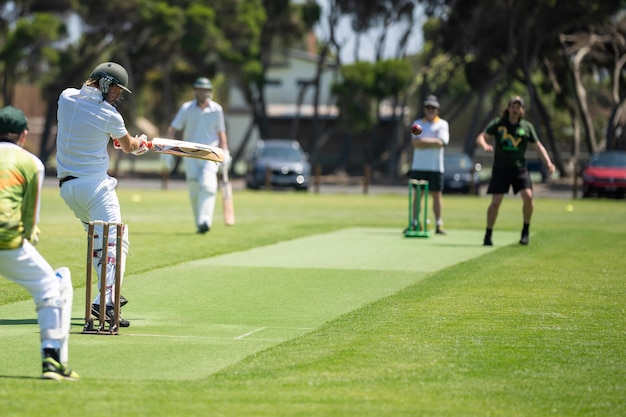

Cricket Batting Power Drills are essential for players aiming to increase hitting distance, enhance bat speed, and elevate overall performance. In today’s competitive cricket environment, power-hitting can turn matches, impress selectors, and give players a significant edge. These drills combine strength training, precision techniques, and timing exercises to produce consistent big hits.
Take Arjun, a young club cricketer struggling with clearing the infield consistently. By integrating specialized power drills into his practice routine, he not only increased his average hitting distance but also built better control, enabling him to place shots strategically rather than just swinging wildly. This shows how structured drills can transform raw potential into real performance.
Why Power-Hitting Matters in Modern Cricket
Modern cricket demands versatility. Beyond technical skill, players must score rapidly, often in T20 or ODI formats, where boundaries and sixes can change the momentum of a match. Cricket Batting Power Drills help players generate bat speed, strengthen wrists, and improve lower-body stability, all crucial for maximum distance and consistency.
Professional coaches emphasize that power-hitting is not just about brute strength—it’s about technique, timing, and mental focus. Players who practice these drills regularly experience enhanced shot selection, better anticipation, and improved confidence under pressure.
Essential Components of Power Drills
Power drills focus on three main areas: bat swing mechanics, body rotation, and explosive strength. Bat swing mechanics involve practicing proper grip, bat angle, and follow-through. Body rotation ensures that energy from the legs and torso transfers effectively to the shot. Strength exercises, including plyometrics and resistance training, build the muscles needed for powerful strokes. (Cricket Batting Power Drills)
For instance, a cricketer practicing with weighted bats can enhance muscle endurance while maintaining technique. Over time, this translates to faster swings with regular bats, leading to longer, controlled hits during matches.
Real-Life Examples of Drill Success
Consider Sanjay, a semi-professional player who struggled with middle-order runs. Incorporating drills like medicine ball swings, lateral jumps, and high-velocity tee shots increased both his bat speed and timing accuracy. Within weeks, he began clearing mid-off and mid-on consistently, demonstrating the practical impact of structured training.
Similarly, professional teams often use video analysis alongside power drills to correct minor flaws in swing or foot placement, ensuring maximum efficiency. This approach blends science and practice, making drills highly effective for all skill levels. (Cricket Batting Power Drills)
Integrating Strength and Conditioning
Strength and conditioning are critical to power-hitting. Core exercises, leg workouts, and wrist strengthening routines complement batting drills. Planks, squats, and forearm rotations improve stability and rotational power, allowing players to generate energy from the ground up.
Riya, an aspiring female cricketer, incorporated resistance band exercises alongside her batting drills. This not only increased her hitting distance but also reduced fatigue during long innings, showing the holistic benefits of combining fitness with skill training. (Cricket Batting Power Drills)
Advanced Batting Drill Techniques
Advanced drills include controlled hitting against high-speed bowling machines, resistance swings, and reaction-based drills where players respond to unpredictable deliveries. These exercises develop timing, precision, and adaptability, essential for real-match scenarios. (Cricket Batting Power Drills)
One advanced drill involves hitting balls from varying angles and speeds while maintaining footwork balance. Players practicing this develop muscle memory for explosive strokes without compromising accuracy, ensuring that every hit is powerful yet controlled.
Mental Focus and Visualization
Power-hitting also requires mental readiness. Visualization techniques, often taught alongside Cricket Batting Power Drills, train players to anticipate bowlers’ deliveries, pick gaps in the field, and execute shots with confidence. Mental drills enhance concentration and reduce hesitation, translating into more consistent long-distance hits.
Arjun, who initially struggled with shot timing, began visualizing the bowler’s arm path and optimal bat angle before hitting. This mental practice, combined with physical drills, significantly improved his strike rate and confidence.
Technology in Batting Drill Improvement
Modern cricket increasingly uses technology to refine batting power. Video analysis, swing trackers, and motion sensors provide immediate feedback on bat speed, angle, and follow-through. Combining these insights with traditional drills ensures players can correct flaws and maximize efficiency quickly.
For young cricketers preparing for competitive leagues, integrating tech-driven feedback with routine Cricket Batting Power Drills accelerates learning and creates a measurable improvement curve, helping them stay ahead in an intensely competitive sport.
Building a Sustainable Training Routine
Consistency is key. Effective drills, when practiced regularly, develop strength, coordination, and timing over time. Players are encouraged to structure practice sessions with warm-ups, technical drills, strength exercises, and cooldowns to prevent injury while maintaining progress. (Cricket Batting Power Drills)
Sustainable training ensures that increased hitting power does not compromise accuracy, stamina, or overall gameplay. Players who follow a balanced regimen see measurable improvements in distance, consistency, and confidence on the field.
Read also:
gimkit jojn
join gimkit
gimkit jpoin
sri lanka national cricket team vs bangladesh national cricket team match scorecard
pakistan national cricket team vs australian men’s cricket team match scorecard
south africa national cricket team vs pakistan national cricket team
pakistan national cricket team vs england cricket team